
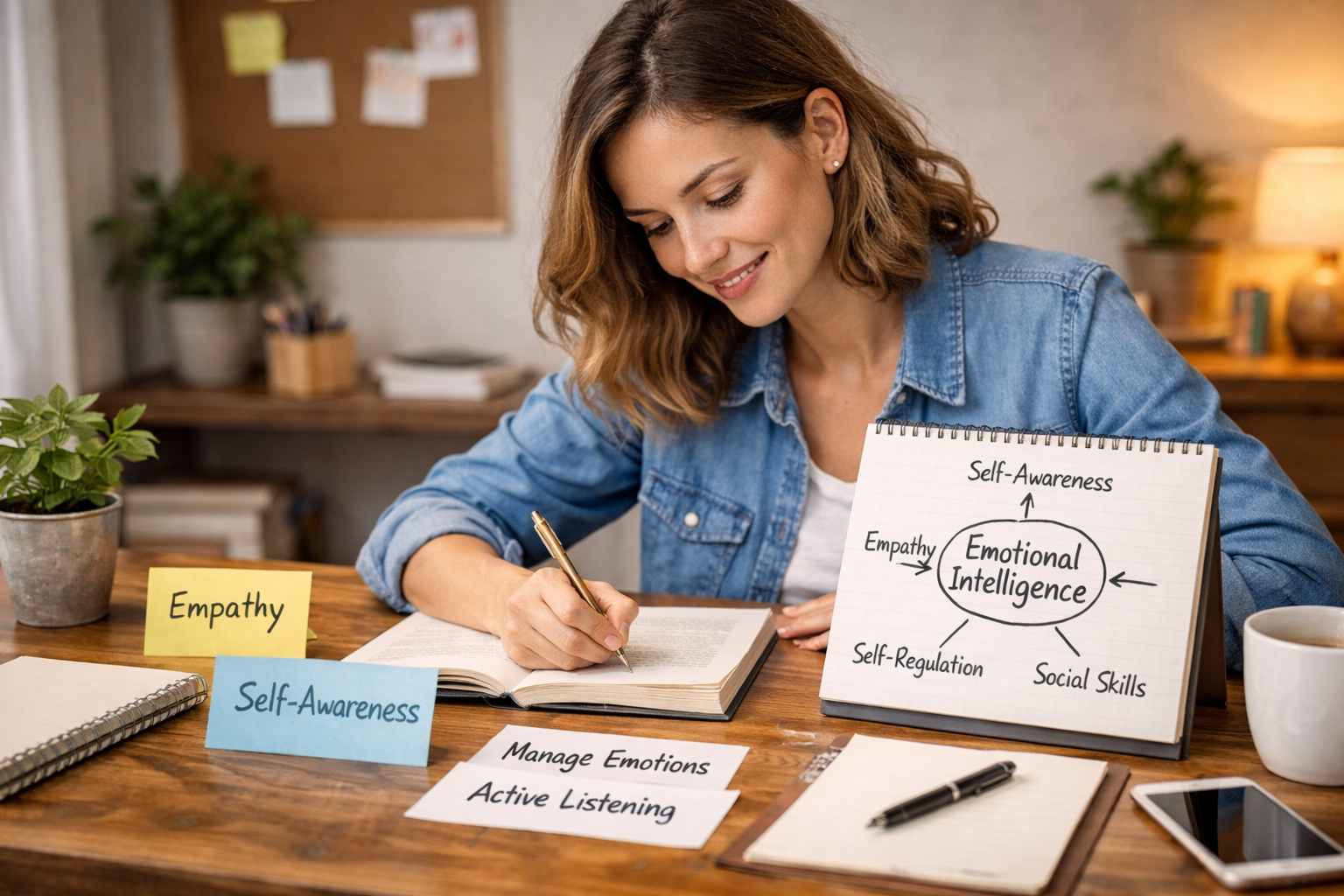
Emotional intelligence is one of the most valuable skills you can develop for both personal and professional growth. While technical knowledge and academic achievements are important, your ability to understand, manage, and express emotions often determines the quality of your relationships, decisions, and overall well-being.
The good news is that emotional intelligence is not a fixed trait. It can be developed with consistent practice, self-awareness, and intentional habits. In this article, you’ll learn practical strategies to strengthen your emotional intelligence and apply it in everyday life.
What Is Emotional Intelligence?
The concept of emotional intelligence was widely popularized by psychologist Daniel Goleman, who described it as the ability to recognize, understand, and manage our own emotions — while also recognizing and influencing the emotions of others.
Emotional intelligence is commonly divided into five key components:
- Self-awareness
- Self-regulation
- Motivation
- Empathy
- Social skills
Developing each of these areas can significantly improve communication, resilience, leadership, and mental well-being.
1. Strengthen Your Self-Awareness
Self-awareness is the foundation of emotional intelligence. It involves recognizing your emotions as they happen and understanding how they influence your behavior.
How to Develop Self-Awareness:
Pause Before Reacting
When you feel a strong emotion — such as anger or frustration — pause for a few seconds. Ask yourself: What am I feeling right now? Why?
Name Your Emotions
Labeling emotions increases clarity. Instead of saying “I feel bad,” try identifying whether you feel disappointed, overwhelmed, anxious, or irritated.
Keep a Reflection Journal
Writing about daily emotional experiences helps you identify patterns and triggers over time.
The more you understand your emotional patterns, the more control you gain over your reactions.
2. Practice Emotional Self-Regulation
Self-regulation is the ability to manage your emotional responses in a healthy and constructive way. It does not mean suppressing emotions — it means responding thoughtfully instead of reacting impulsively.
Practical Strategies:
Use Breathing Techniques
Deep breathing activates your body’s relaxation response. Inhale slowly for four seconds, hold for four seconds, and exhale for four seconds.
Delay Important Decisions When Emotional
If you are highly emotional, give yourself time before making significant decisions.
Develop Healthy Coping Mechanisms
Exercise, journaling, meditation, and taking short walks are effective ways to process emotions.
Managing emotions effectively reduces conflict, stress, and regret.
3. Cultivate Intrinsic Motivation
Emotionally intelligent individuals are often driven by internal values rather than external validation.
Instead of asking, “What will others think?” ask yourself, “Does this align with my goals and values?”
Ways to Build Motivation:
- Set meaningful personal goals
- Celebrate small achievements
- Focus on progress rather than perfection
- Maintain a growth mindset
When your motivation comes from within, setbacks become learning opportunities rather than failures.
4. Develop Empathy
Empathy is the ability to understand and share the feelings of others. It strengthens relationships and improves communication.
How to Increase Empathy:
Practice Active Listening
Listen without interrupting. Focus on understanding rather than preparing your response.
Observe Nonverbal Cues
Facial expressions, tone of voice, and body language often communicate more than words.
Ask Open-Ended Questions
Encourage others to express themselves fully by asking thoughtful questions.
Empathy builds trust and reduces misunderstandings in both personal and professional environments.
5. Improve Your Social Skills
Strong social skills allow you to navigate relationships effectively. This includes communication, conflict resolution, teamwork, and leadership.
Practical Tips:
Communicate Clearly and Calmly
Express your needs respectfully without aggression or defensiveness.
Learn to Handle Conflict Constructively
Focus on solutions rather than blame.
Give and Receive Feedback Gracefully
Accept constructive criticism as an opportunity to grow.
Developing social skills enhances collaboration and strengthens your support network.
The Role of Emotional Intelligence in Daily Life
Emotional intelligence influences nearly every area of life:
- Workplace performance
- Leadership ability
- Romantic relationships
- Friendships
- Stress management
- Decision-making
People with higher emotional intelligence often experience better emotional balance and stronger interpersonal connections.
Common Barriers to Emotional Growth
Developing emotional intelligence requires effort and patience. Some common obstacles include:
- Fear of vulnerability
- Avoiding difficult conversations
- Suppressing emotions
- Lack of self-reflection
Acknowledging these barriers is the first step toward overcoming them.
Growth happens when you choose awareness over avoidance.
Daily Habits to Strengthen Emotional Intelligence
Here are simple daily practices that can accelerate your development:
Reflect at the End of the Day
Ask yourself:
- What emotions did I experience today?
- How did I respond?
- What could I improve tomorrow?
Practice Mindfulness
Mindfulness increases awareness of thoughts and emotions without judgment.
Seek Constructive Feedback
Trusted friends or colleagues can offer valuable insight into blind spots.
Read and Learn Continuously
Books and educational content about psychology and communication can deepen your understanding.
Consistency is more important than intensity. Small improvements compound over time.
Emotional Intelligence and Mental Well-Being
While emotional intelligence supports mental well-being, it is not a replacement for professional mental health care. If someone is experiencing persistent emotional distress, seeking support from a qualified professional is important.
Developing emotional intelligence simply equips you with better tools to navigate everyday challenges, manage stress, and build stronger relationships.
Building Emotional Intelligence Is a Lifelong Journey
Emotional intelligence is not mastered overnight. It develops gradually through self-awareness, intentional practice, and reflection.
By improving how you understand and manage emotions — both your own and others’ — you create healthier relationships, make better decisions, and cultivate greater resilience.
Start small. Choose one area — self-awareness, self-regulation, empathy, motivation, or social skills — and focus on strengthening it this week.
Over time, these consistent efforts will transform the way you relate to yourself and the world around you.